How To Run Efficient & Engaging Meetings Like a Destination Workplace™ Does
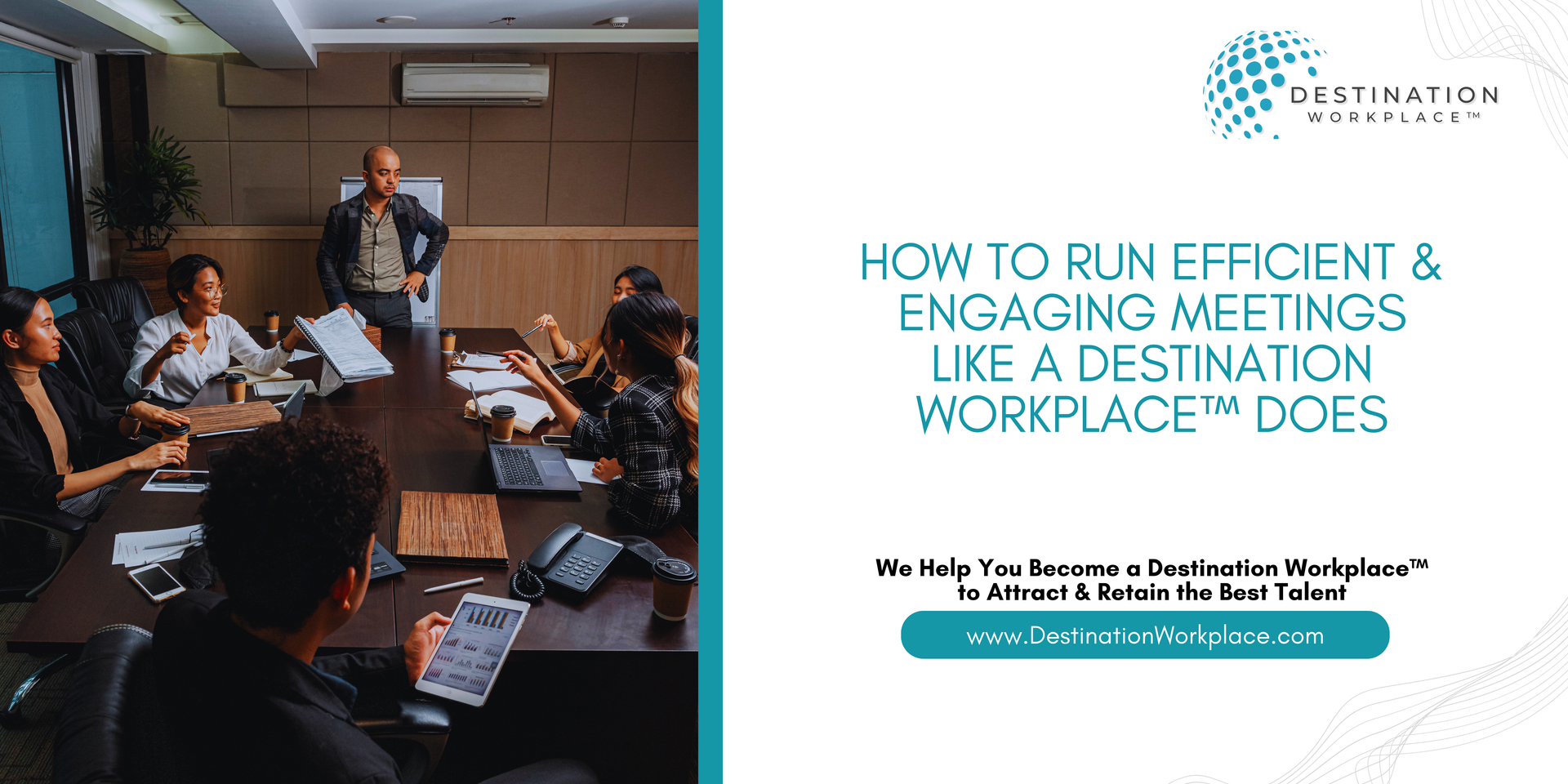
Meetings are an essential part of every organization, but when not executed properly, they can become time-consuming, unproductive, and even disengaging for employees. In a Destination Workplace™, where leadership fosters both productivity and employee satisfaction, meetings need to be structured in a way that enhances efficiency while also engaging employees. In this article, we'll explore strategies to optimize meetings for maximum efficiency and employee engagement, so that you can ensure your meetings contribute to positioning your company as a Destination Workplace™.
1. Set Clear Objectives and Agendas
A meeting without a defined purpose can quickly derail, wasting time and leaving employees frustrated. Research from the Harvard Business Review shows that 67% of meetings are deemed unproductive by employees, with unclear objectives being a leading cause of this dissatisfaction. Establishing clear objectives and a detailed agenda ahead of time is critical to ensuring that meetings stay focused and productive.
Actionable Tip:
- Create and circulate the agenda at least 24 hours in advance, ensuring the agenda includes specific topics, who will be leading each segment, and what decisions need to be made. This allows attendees to prepare for the discussion and contribute meaningfully to the conversation.
- Allow time for creative problem-solving and innovation. You can do this by asking employees to come to each meeting with any challenges they have faced recently, and then have them brainstorm solutions as a team.
2. Limit Meeting Length and Frequency
According to a study by Atlassian, the average employee attends 62 meetings per month, with half of these meetings being considered a waste of time. The duration and frequency of meetings directly impact employee engagement and productivity. Overly long or frequent meetings can lead to disengagement and frustration, while short, focused meetings can drive better results and keep the team energized.
Actionable Tip:
- Cap meeting times at 30 minutes and hold them only when necessary. Short, well-prepared meetings keep participants engaged and ensure that discussions remain focused on decision-making and problem-solving.
- Use Amazon CEO Jeff Bezos’ "two-pizza rule": No meeting should involve more people than can be fed with two pizzas. This ensures that meetings are small, focused, and conducive to active participation.
3. Encourage Active Participation and Ownership
One of the most effective ways to engage employees during meetings is to foster a culture of participation and ownership. Employees who feel that their voice is heard are more likely to contribute ideas and stay engaged in discussions. Gallup research shows that highly engaged employees are 17% more productive and 21% more profitable for their organizations. Encouraging employees to take an active role in meetings can be a critical step toward increasing overall engagement.
Actionable Tip:
- Use Adobe’s strategy known as “Check-In Meetings,” where leaders act as facilitators rather than dominators of conversation. These meetings encourage employee input, creating an environment of psychological safety and shared ownership over outcomes.
- Rotate meeting leadership roles to give team members the opportunity to take ownership of the agenda and guide discussions. This not only increases engagement but also develops leadership skills across the organization.
4. Leverage Technology to Enhance Efficiency
Technology can be a powerful tool to streamline meetings, reduce administrative burden, and enhance collaboration. Using the right platforms can ensure that meetings run smoothly, even when teams are remote or hybrid.
Actionable Tip:
- Utilize collaborative tools such as project management software(e.g., Slack, Asana), or digital whiteboards (e.g., Trello, Miro) to track progress and document meeting outcomes in real-time. This reduces the need for follow-up emails and ensures everyone is aligned.
5. End with Actionable Takeaways and Accountability
A meeting without clear action steps is an opportunity wasted. A study by the University of Minnesota found that 64% of decisions made in meetings are never followed up on. Assigning accountability ensures that ideas are implemented and progress is tracked.
Actionable Tip:
- Use Facebook’s, “Wrap-Up” strategy. This practice ensures that all action items are reviewed and assigned to specific individuals, with deadlines clearly communicated. This approach holds everyone accountable for execution, which drives results.
- Use a post-meeting summary email or shared document to document decisions and action items, along with the names of the responsible parties. This simple step keeps everyone aligned and accountable for delivering results.
In a Destination Workplace, where leadership values both productivity and employee satisfaction, structured, focused, and engaging meetings become a key driver of innovation and success. Implement these strategies in your meetings, and you'll not only see improved results but also foster a culture of trust, ownership, and accountability that makes your organization a true Destination Workplace™.
Creating a winning company culture takes effort, but it's well worth it, and company culture happens to be our area of expertise. We help you become a
Destination Workplace™ so you can attract and retain the best talent in this hyper-competitive marketplace. Contact us to learn about our
leadership development,
culture development,
corporate wellness programs and more!
About Betsy:
Featured on
FOX, CBS, NBC, and ABC, Betsy Allen Manning is a high-energy leadership keynote speaker and workplace culture strategist who equips organizations across corporate, franchise, association, non-profit, and government sectors to develop high-achievers, high-impact leaders and high-purpose cultures. Through her
national workplace research and
DNA Activation Framework, she delivers data-backed, high-interaction keynote presentations and workshops that strengthen performance, leadership, and retention. Betsy is also the founder of Destination Workplace™, an award-winning leadership training company in Dallas, trusted by some of the world's most elite brands nationwide.