Why Promoting Your Best Performer Is Quietly Breaking Your Leadership Pipeline
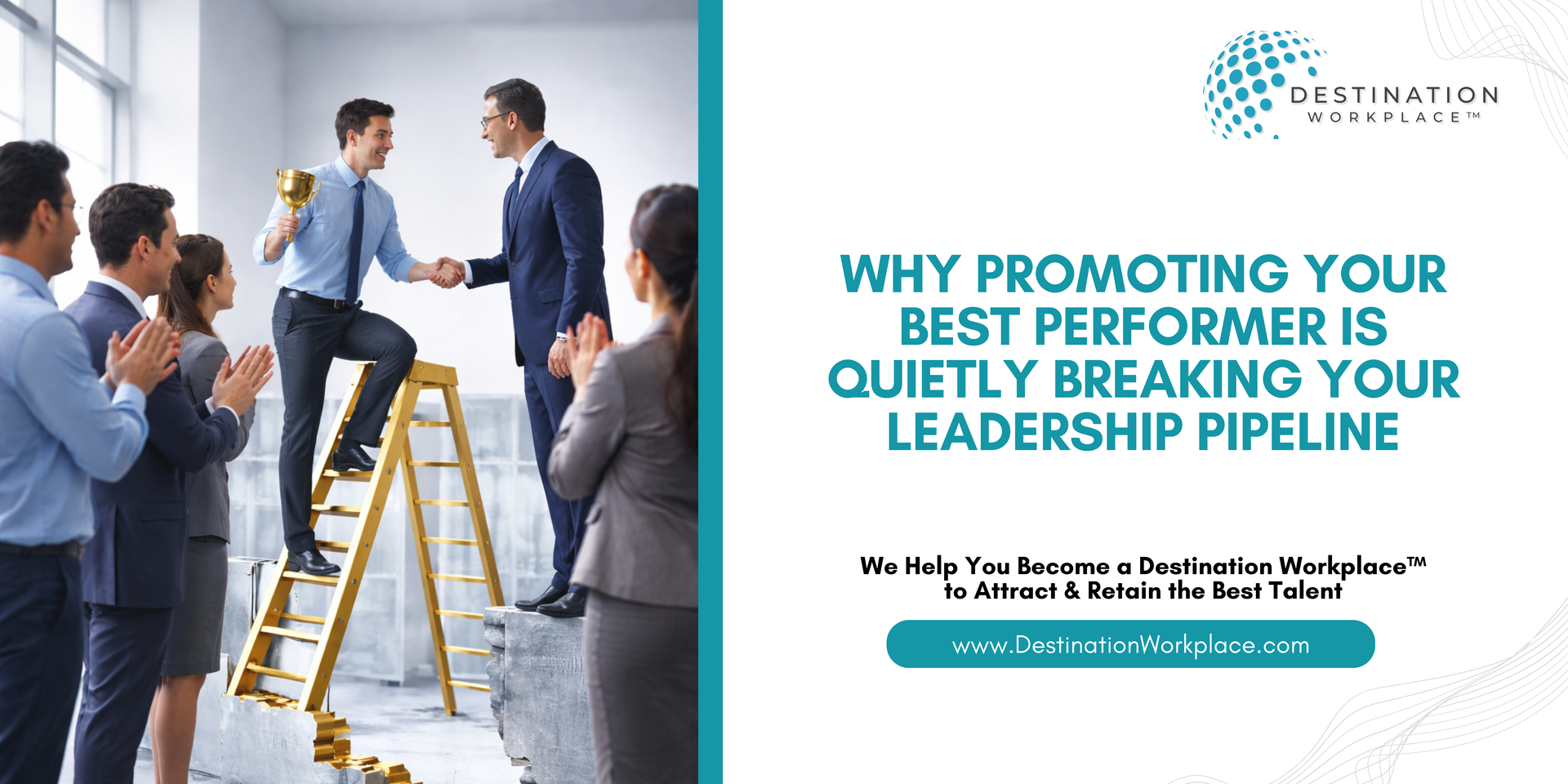
The most dangerous leadership myth in today’s workplace is this:
If someone is great at their job, they must be ready to lead.
That assumption sounds logical. It also explains why so many teams feel stuck, exhausted, or quietly disengaged right now.
Promoting top performers without preparing them to lead is not a growth strategy. It’s a risk.
The direct answer leaders are searching for
If you are asking why your managers feel overwhelmed, why communication keeps breaking down, or why good people are leaving despite competitive pay, here is the answer:
You are promoting performance instead of leadership readiness.
What is really happening inside organizations
Across prep calls with healthcare systems, school districts, financial institutions, construction firms, and professional services, the pattern is consistent.
Organizations are under pressure. Staffing is tight. Turnover is high. Results matter. So when a high performer steps up, leaders promote them quickly and hope leadership instincts will follow.
They usually do not.
Instead, we see:
- Managers who know the technical work but avoid hard conversations
- Leaders who jump back into doing the work instead of coaching others
- Teams who feel informed but not led
- Burnout disguised as dedication
One client call I recently had with a CEO captured it perfectly: “They know how to do the work, but they do not know how to lead people.”
This is how capable employees turn into firefighters instead of leaders. They spend their days reacting, fixing, and absorbing pressure instead of setting direction and developing others.
Why this costs more than you think
When leadership readiness is skipped, the cost shows up fast.
People stop offering ideas. Communication becomes transactional. Accountability feels personal. Trust erodes quietly.
Eventually, your most capable employees begin thinking, “I love my work, but I cannot work under this leadership.”
This is how organizations become Resignation Workplaces without realizing it.
Leadership is not a title or a reward. Leadership is a responsibility. If someone has not been equipped to carry that responsibility, the role will carry them instead.
The leadership shift that changes everything
Strong organizations do not promote potential. They prepare it.
Leadership readiness looks like this in practice:
- Leaders understand how to communicate expectations clearly
- They coach instead of rescue
- They hold people accountable without blame
- They model the behaviors they expect from others
- They understand that culture is built through daily experiences, not intentions
This is why leadership development can no longer be optional or reactive.
According to the National Workplace Trends Study, 81% of employees believe the most successful organizations prioritize learning and development. When leadership growth is intentional, retention improves, trust strengthens, and performance stabilizes.
A different way to think about promotion
Before the next promotion, the better question is not:
“Are they the best at their job?”
The better question is:
“Can they coach
others
to be successful at
their
job?”
The skills that create top performers are rarely the same skills that create effective leaders.
Organizations that understand this do not just fill roles. They train for leadership excellence.
And that is the difference between temporary results and lasting impact.
About Betsy:
Featured on FOX, CBS, NBC, and ABC, Betsy Allen Manning is a high-energy leadership keynote speaker and workplace culture strategist who equips organizations across corporate, franchise, association, non-profit, and government sectors to develop high-achievers, high-impact leaders and high-purpose cultures. Through her national workplace research and frameworks, she delivers data-backed, high-interaction keynote presentations and workshops that strengthen performance, leadership, and retention. Betsy is also the founder of Destination Workplace™, an award-winning leadership training company in Dallas, trusted by some of the world's most elite brands nationwide.