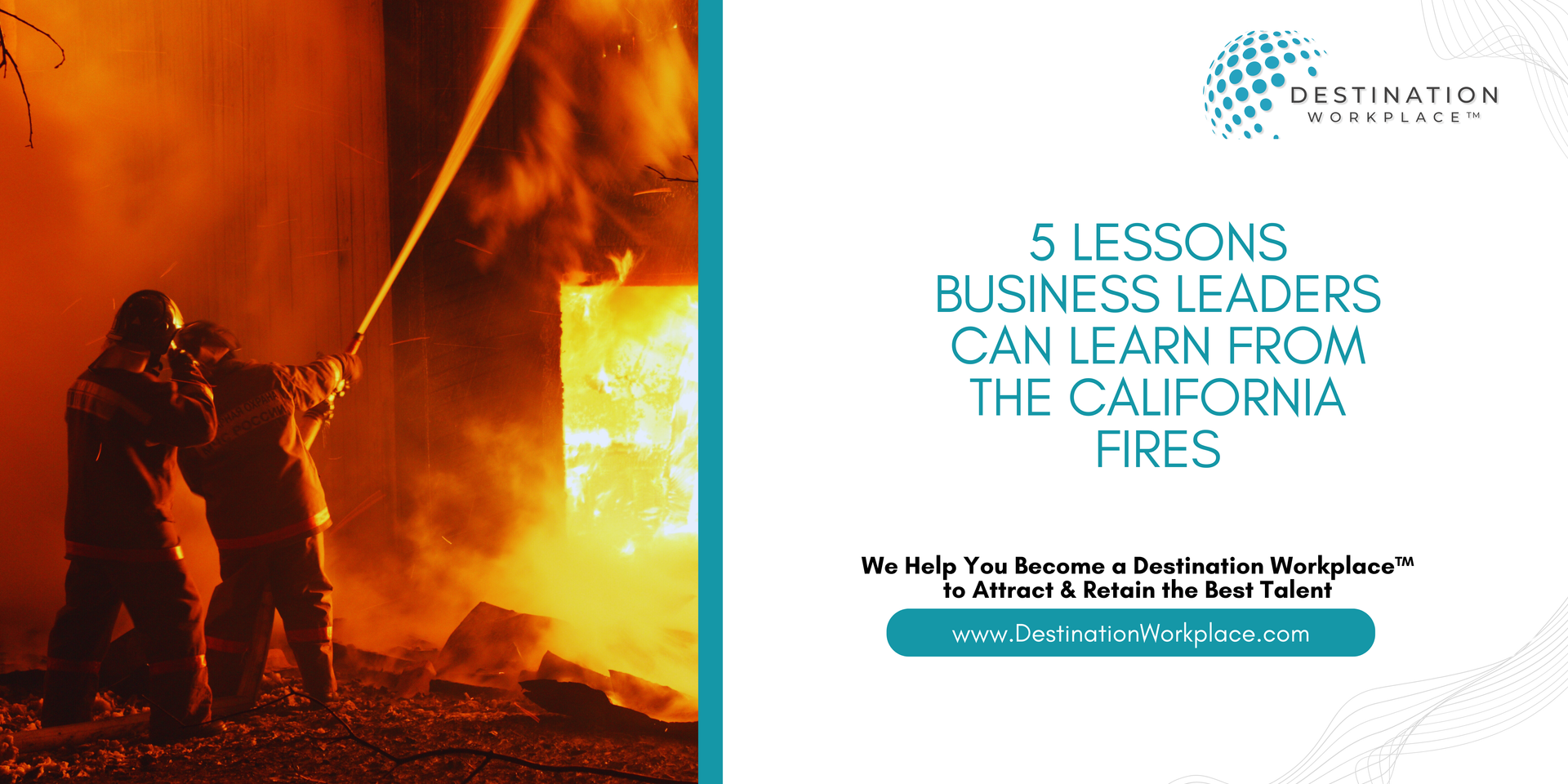
5 Lessons Business Leaders Can Learn from the California Fires
When disaster strikes, leadership is tested in ways that reveal character, competence, and commitment. The recent California fires have not only exposed critical gaps in disaster response but also the pitfalls of playing the blame game instead of stepping up to lead, offering valuable lessons for business leaders everywhere. Let’s explore five takeaways from this devastating natural disaster that can transform the way leaders navigate their own crises.
1. Own the Crisis
The first rule of leadership during a crisis is accountability. Leaders don’t have the luxury of playing the blame game. Their responsibility is to own the situation, rally their teams, and focus on solutions—not scapegoats. Just as in the case of Governor Newsom and the California wildfires, deflecting blame in a business crisis fuels chaos and diminishes trust.
The 2025 National Workplace Trends Study reveals that 57% of employees lose trust in leaders who lack transparency and accountability. Businesses can learn a big lesson from the California wildfire crisis—your employees and stakeholders need direction, not deflection.
2. Prevention Today Avoids Disasters Tomorrow
The California fires remind us that you can’t wait until the flames are on your doorstep to act. Known risks require proactive solutions. Wildfires are a known risk, just as market shifts or supply chain disruptions are for businesses, and reactive costs are far higher than preventive ones. Smart leaders identify risks early, invest in prevention, and ensure their teams are equipped to respond. Preparing your team for challenges before they ignite is how leaders build resilience and trust. Think of it as fireproofing your business from the inside out.
3. Ignite Communication to Extinguish Panic
Timely communication is a leader’s superpower during a crisis. Clear, consistent, and actionable messaging can mean the difference between order and chaos. Imagine being a resident receiving conflicting evacuation orders during a wildfire—panic would ensue. The same holds true in business. Confusion during a crisis breeds fear and inefficiency. Transparent communication, which is a high priority for 57% of employees, keeps teams aligned and focused. Leaders must share actionable steps, not just good intentions.
4. Empathy Builds Morale in the Ashes
In a crisis, people don’t just need information—they need compassion. Whether it’s Californians evacuating their homes or employees worried about their jobs, leaders need to show they care. Leaders who prioritize empathy in their responses create psychological safety for their teams. Empathy isn’t just about being nice—it’s about building trust that fuels recovery and resilience.
5. A Crisis is the Ultimate Leadership Test
Crisis leadership isn’t about waiting for the perfect plan—it’s about decisive action. Employees watch how leaders act in tough times. Leaders who flounder or hesitate lose trust. A poor response can lead to high turnover, with 42% of Gen Z workers saying they’d leave for better leadership. The way you manage a crisis defines your culture, your reputation as a leader, and your team’s loyalty.
Every crisis reveals what leadership truly looks like. Whether it’s wildfires or workplace challenges, the best leaders take accountability, prepare in advance, communicate clearly, and act with empathy. As we say at
Destination Workplace™: A crisis doesn’t destroy leaders—it exposes them.
Tips for Business Leaders to Strengthen Crisis Leadership:
Conduct Crisis Simulations: Regularly run drills to prepare your team for potential disruptions.
Create a Communication Plan: Outline who communicates what, when, and how during emergencies.
Invest in Preventive Measures: Identify risks early and allocate resources to address them proactively.
Lead with Empathy: Ensure team members feel supported with regular check-ins and genuine care.
Review and Reflect Post-Crisis: Conduct after-action reviews to learn and improve for the future.
By applying these principles, you can lead your organization through challenges with integrity, decisiveness, and empathy—qualities that turn tough moments into opportunities for growth.
Creating a winning company culture takes effort, but it's well worth it, and company culture happens to be our area of expertise. We help you become a Destination Workplace™ so you can attract and retain the best talent in this hyper-competitive marketplace. Contact us to learn about our leadership development, culture development, corporate wellness programs and more!
The Destination Workplace™ Team
About Betsy: Featured on FOX, CBS, NBC, and ABC, Betsy Allen-Manning is a leadership keynote speaker, workplace culture expert, and best-selling author who helps executives and HR leaders strengthen employee engagement, improve retention, and prepare for the future of work. Betsy’s thought leadership and original research in the National Workplace Trends Study and the Destination Workplace™ framework equips organizations with data-driven strategies to build cultures where people apply, engage, contribute, and stay. She is also the founder of an award-winning company known for providing top leadership training in Dallas, and is recognized for advancing leadership excellence and driving workplace culture transformations worldwide.