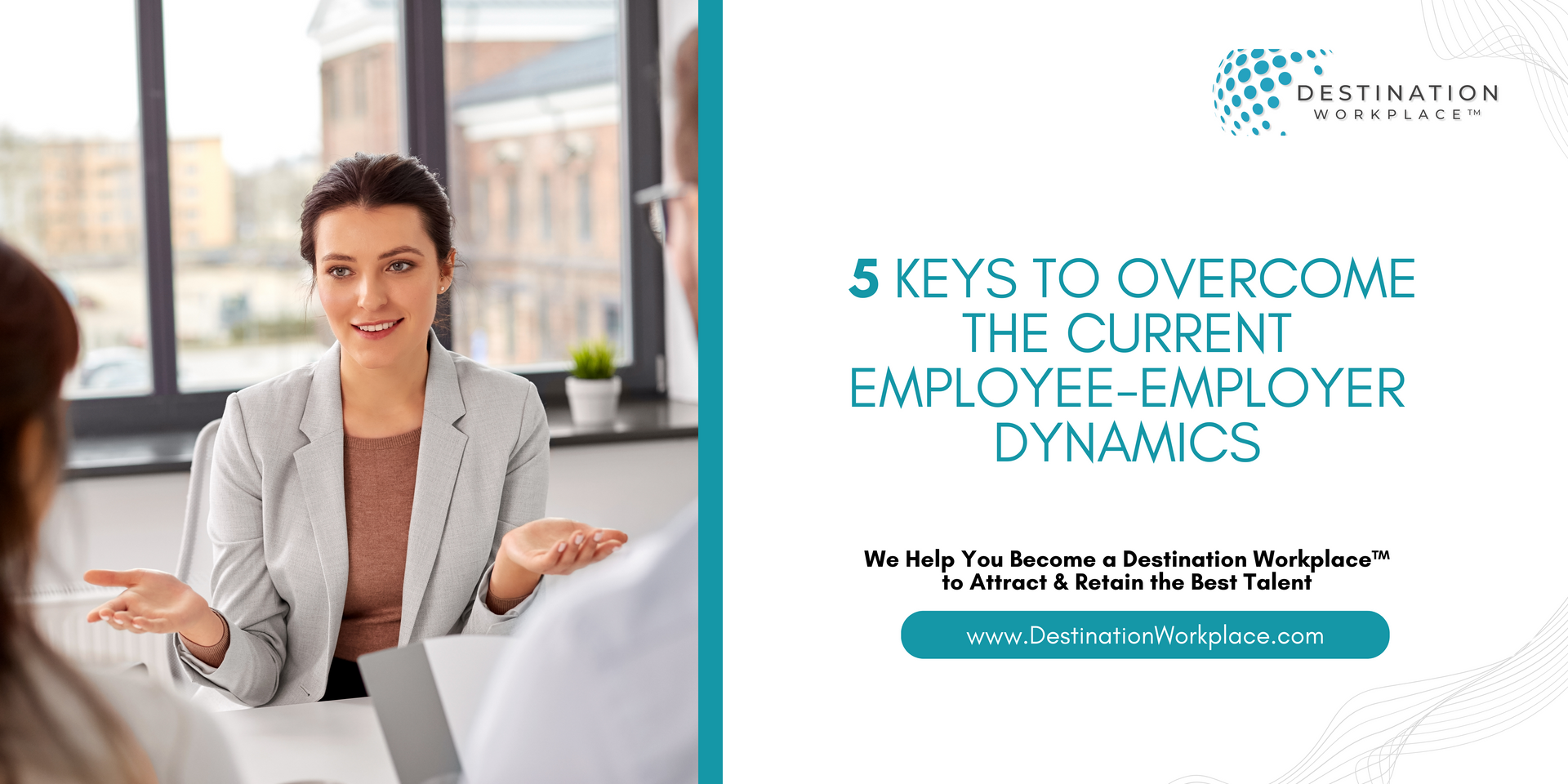
5 Keys to Overcome the Current Employee-Employer Dynamics
In any workplace, the relationship between employees and employers plays a pivotal role in organizational success. However, navigating this dynamic can be fraught with challenges. Here are five common struggles that both employees and employers may encounter:
1. Understand Communication Barriers
Effective communication is essential for fostering understanding and collaboration. Yet, miscommunication or a lack thereof can lead to misunderstandings, conflicts, and decreased productivity. Employers can enhance communication by establishing clear channels of dialogue and encouraging open communication while also making employees feel comfortable expressing their thoughts and concerns.
2. Re-Align Expectations
Misaligned expectations between employees and employers can lead to frustration and dissatisfaction on both sides. Employers may expect certain levels of performance or behavior from their employees, while employees may have different perceptions of their roles or career progression. Establishing clear expectations through job descriptions, performance reviews, and regular feedback sessions can help bridge this gap.
3. Manage Work-Life Balance Struggles
Achieving a healthy work-life balance is increasingly important for employee well-being and retention. Employers often inadvertently contribute to work-life imbalance through unrealistic workloads, overtime expectations, or a lack of flexibility. Employees may struggle to disconnect from work outside of office hours, leading to burnout and decreased job satisfaction. Finding ways to support employees' personal lives while meeting business needs is essential for maintaining a harmonious employee-employer dynamic.
4. Ramp Up Recognition
Feeling valued and appreciated is crucial for employee motivation and morale. Yet, many employees feel undervalued or unrecognized for their contributions, leading to disengagement and turnover. Employers can cultivate a culture of appreciation by recognizing achievements, providing constructive feedback, and offering rewards or incentives for outstanding performance. Employees, in turn, can actively seek feedback and communicate their accomplishments to their employers.
5. Build Trust
Trust forms the foundation of any healthy relationship, including the one between employees and employers. Trust issues can arise due to perceived favoritism, lack of transparency, or breaches of confidentiality. Employers should demonstrate integrity, consistency, and fairness in their actions to earn employees' trust. Similarly, employees should strive to uphold their commitments, communicate openly, and demonstrate professionalism in their work.
The employee-employer dynamic is complex and multifaceted, with both parties facing challenges in maintaining a positive relationship. By addressing communication barriers, aligning expectations, promoting work-life balance, fostering recognition and appreciation, and building trust, organizations can cultivate a supportive and productive work environment for all. Which is key to driving organizational success and employee satisfaction.
Creating a winning company culture takes effort, but it's well worth it, and company culture happens to be our area of expertise. We help you become a
Destination Workplace™ so you can attract and retain the best talent in this hyper-competitive marketplace. Contact us to learn about our
leadership development,
culture development,
corporate wellness programs and more!
The Destination Workplace™ Team
About Betsy:
Featured on
FOX, CBS, NBC, and ABC, Betsy Allen Manning is a high-energy leadership keynote speaker and workplace culture strategist who equips organizations across corporate, franchise, association, non-profit, and government sectors to develop high-achievers, high-impact leaders and high-purpose cultures. Through her
national workplace research and
DNA Activation Framework, she delivers data-backed, high-interaction keynote presentations and workshops that strengthen performance, leadership, and retention. Betsy is also the founder of Destination Workplace™, an award-winning leadership training company in Dallas, trusted by some of the world's most elite brands nationwide.