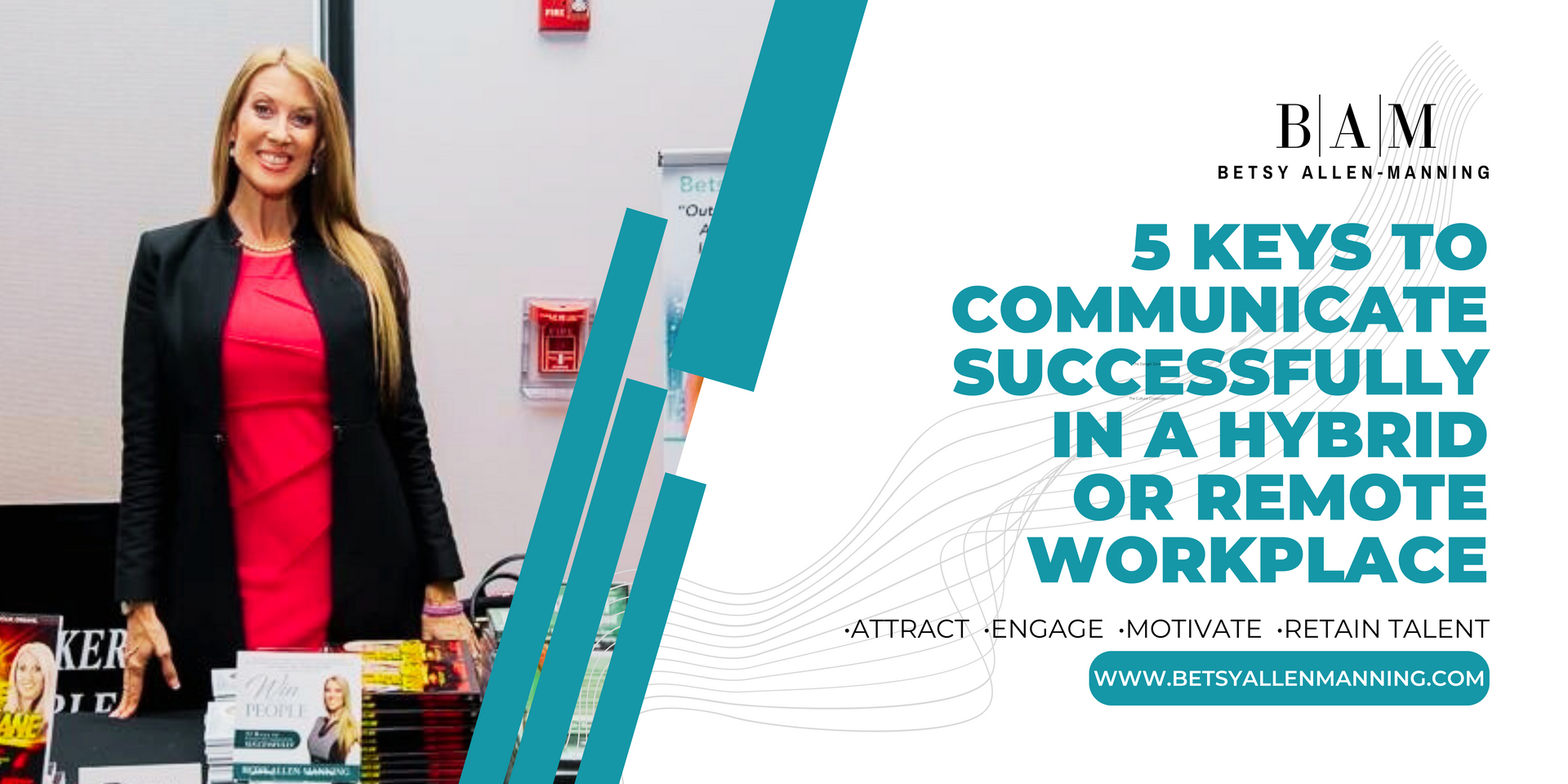
5 Keys To Communicate Successfully In a Hybrid or Remote Workplace
Hybrid work setups have become the norm for many companies, and come with many challenges; such as maintaining effective communication in remote teams, empowering remote workers, virtual team collaboration, maintaining workplace community, remote team productivity and maintaining open communication in hybrid teams. Communication with team members onsite and those working remotely is essential to ensure every project is a success, and deadlines are met. In this article, we will explore hybrid work strategies for succeeding and tips for navigating challenges of remote work.
1. Establish Goals and Expectations:
Before the hybrid or remote work arrangement starts, the employer should establish goals and expectations for every team member. This gives each staff member a sense of purpose, direction, and motivation, particularly when working from home. Clear guidelines also ensure everyone stays on the same page and know what is expected of them to achieve every goal.
2. Create Specific Communication Guidelines:
When everyone is working from a different location, it is essential to have communication guidelines to avoid confusion. It is advisable to create a communication pattern where everyone understands the expectations and responds appropriately. For instance, you can agree on the maximum response time for emails or text messages. Also, establish clear communication protocols for emergency situations and outline the best method to reach out to colleagues, supervisors, or managers.
3. Use High Tech Communication Tools:
Video conferencing, instant messaging, and shared documents are essential communication tools for remote and hybrid work options. Use video conferences to create a community during virtual meetings with remote team members and ask about their well-being. Video conferencing fosters a sense of social connectedness among remote staff members. Use instant messaging to distribute communicable information quickly and get immediate feedback from on-site and remote employees.
4. Encourage Open Communication:
One potential drawback of remote work is that communication can quickly become one-sided or non-existent. To avoid this potential shortcoming, employers and senior employees should actively encourage open and honest communication from each team member, regardless of location or work situation. Clear communication can minimize issues that can arise while ambiguities arise in the expectations and goals.
5. Foster A Positive Remote Culture:
Remote workers may experience a sense of isolation, particularly as they miss out on the day-to-day interaction that takes place in an office setup. Leaders need to create opportunities for remote workers to interact socially and professionally. This can include virtual games, online classes, virtual book clubs, and many other fun activities that can encourage positive working relationships remotely. Leaders should also remember to connect a company’s mission and core values with each individual’s role and performance; rewarding those who consistently display them.
Remote work arrangements can pose challenges, but keeping up with proper communication can ensure that staff members work effectively and efficiently. By taking care to establish expectations, use high-tech communication tools, empower the team members, promote open communication, and creating a sense of community, employers can keep their teams motivated and maintain the highest levels of productivity possible. Ultimately, employers who embrace remote work can reap the benefits of a more engaged and happier workforce in the long run.
About Betsy:
Featured on
FOX, CBS, NBC, and ABC, Betsy Allen Manning is a high-energy leadership keynote speaker and workplace culture strategist who equips organizations across corporate, franchise, association, non-profit, and government sectors to develop high-achievers, high-impact leaders and high-purpose cultures. Through her
national workplace research and
DNA Activation Framework, she delivers data-backed, high-interaction keynote presentations and workshops that strengthen performance, leadership, and retention. Betsy is also the founder of Destination Workplace™, an award-winning leadership training company in Dallas, trusted by some of the world's most elite brands nationwide.